-
The Toy Knife and the Apple Trees
On May 5, 1791, Cornelius Van Horn was plowing a field near the young settlement at Meadville when armed men came toward him.
-
A Name on a Railroad Car
A carload of poultry or eggs leaving Sumner, Iowa, represented considerably more than the farmer who had produced them. Someone had to buy the goods, sort and pack them, arrange space on the railroad, deal with spoilage and delays, and find c…
-
The Schoolmaster and the Giant
In 1809, a schoolmaster in East Fallowfield Township met a pupil he was afraid he couldn't whip. This was a serious professional difficulty for James McEntire, who believed that a teacher must be able to master the children placed in his charge.
-
Peaches for Her Mother
About 1817, a little daughter of Jerry Gelvin set out from her uncle's house with peaches for her mother. Her mother was ill, and the fruit was intended as a gift to her.
-
The Man Beneath the Pine
Richard Dick held land in East Fallowfield Township before the township was formally organized. On July 13, 1797, his name was entered against Tract 786 in the Pennsylvania Population Company's contracts.
-
Four Hundred Acres and a Dream
Thomas Frame carried a rifle, a camp kettle and provisions when he set out from Meadville into the country he hoped to settle.
-
Six Thousand Turkeys That Never Arrived
An order for six thousand turkeys is a considerable undertaking, particularly when the merchandise must arrive young, alive, and on a date the buyer can use.
-
The Fiddle That Found Its Way Home
-
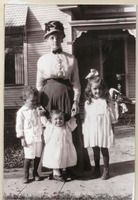 Ada Wescott with Verne, Lois, and Gwen
Family photograph identified by Thyria Wilson as showing Ada Wescott with Verne, Lois, and Gwen outside a house reportedly built by Eugene Wescott.
-
Eugene Merritt Westcott
Eugene Merritt Westcott (1857–1913) was the husband of Ada May Wellman Wescott and son of Orris Waterman Westcott and Mary Maria Carroll. Family history remembers him for his handmade fiddle.
-
Ada May Wellman Wescott
Ada May Wellman Wescott was a member of the Iowa branch of the Wescott family. She is credited with The Votin' Question, a poem challenging opposition to women's suffrage, preserved in a typewritten copy marked 1918?. The document was shared with the family by historian Thyria Wilson in November 2026.
-
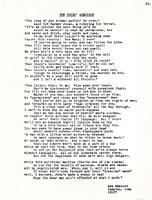 The Votin' Question — Ada May Wellman Wescott
A typewritten copy of a women's suffrage poem attributed to Ada May Wellman Wescott of Hampton, Iowa, dated approximately 1918. The poem was preserved in family records and shared by genealogical researcher Thyria Wilson in November 2026.